
Kratom Laws in Vietnam: Will Vietnam Legalize Kratom Soon?

Despite kratom growing natively within its forests, and despite having an entire category of kratom named after it, Vietnam has made their law pretty clear – kratom is not legal. But with neighboring countries like Thailand and Indonesia enjoying the economic returns of booming kratom export industries, will Vietnam soon lift the ban and join the ranks of the world’s biggest kratom exporters?
 The Kratom Laws in Vietnam
There was a time that, like many other countries around it, Vietnam didn’t bat an eye about kratom and its use. Up until right before the year 2000, kratom was an accepted traditional folk medicine used by laborers, farmers, and fisherfolk for a little extra energy as they tackled the day’s labor.
By 2000, Vietnam officially established the foundational Law on Prevention and Control of Narcotics which was the country’s first-ever, modern anti-narcotics legal framework. Between 2015 and 2018, the government passed Decree No. 73/2018/ND-CP which standardized its official “Lists of narcotics and precursors” to crack down on emerging synthetic and botanical psychoactive substances.
Later in 2021, while Thailand removed kratom from their list of controlled substances, Vietnam doubled-down by banning unapproved narcotic materials and toxic botanicals from health supplements and commercial imports. In 2025, Vietnam criminalized drug use and implemented harder penalties for possession, sale, and trafficking.
Currently, there is no indication that Vietnam will lift the ban on kratom. In fact, Vietnam seems to be moving in the opposite direction as a Southeast Asian member nation of the ASEAN Drug Monitoring Report where the country highlighted kratom as a major driver of New Psychoactive Substance seizures and called for stronger legislative controls rather than deregulation.
Keep in mind, though – nowhere in Vietnam’s law is kratom or its derivatives explicitly mentioned. Unlike other controlled substances that are named outright, kratom falls within the general, umbrella category of botanical psychoactive substances and herbal health supplements.
That said, kratom is outrightly identified as being illegal, but because it hasn’t been assessed or approved for human consumption in the country, it remains illegal despite there not being a stand-alone law that bans kratom specifically.
Can You Buy Kratom in Vietnam?
No, there are no registered kratom vendors operating in Vietnam. Despite the abundance of kratom throughout the hot, humid, Southeast Asian nation, there’s actually very little demand for it. Kratom in Vietnam isn’t as prolific as it is in neighboring countries like Indonesia or Thailand, and there isn’t really a local push for legalization because people don’t really incorporate kratom into their daily life.
There is still some documented local use, but these incidents involve farmers and fisherfolk who leverage the herb using the same, traditional, folk medicine methods popularized by native Vietnamese people. This means simply plucking and chewing on the raw leaves, since kratom grows fairly common especially along the Mekong River.
What Happens if You Bring Kratom to Vietnam?
All of the previous legalese would likely intimidate a visitor planning a trip to Vietnam and hoping to bring their kratom stash with them, and rightfully so. Being categorized as an unregistered psychoactive botanical makes kratom essentially an illicit substance within the country’s borders, and being caught with it could result in some pretty serious penalties.
But that’s where things get a little blurry. While the laws staunchly outline what Vietnam does and doesn’t accept, it doesn’t really have the teeth to implement it. That is, enforcement authorities tend to glaze over kratom products that pass through their airports, as explained by numerous users across various forums.
According to their accounts, some were allowed to pass through without so much as a second glance, carrying 150 kratom capsules labeled as health supplements. Others go the matcha route, and tag their products as tea. Then there are those who don’t bother with the false labeling at all, and just bring sealed, marked kratom into the country without raising any alarm bells.
So while the country makes their stance on kratom clear, authorities on the ground don’t seem to be quite as aware of what kratom is. Again, that may be because despite its presence in the country as an endemic evergreen tree, locals don’t actually use it and there isn’t a local market for it.
Users also attribute this loose implementation to the fact that despite all the hard crack downs on unapproved psychoactive substances, the law doesn’t mention kratom outright.
Does this mean you should bring your kratom stash into Vietnam? Still no. While many of the authorities that are supposedly implementing these laws seem to let it slide, there’s no way to tell whether the specific customs officer you’ll encounter when you get there will be the same.
Penalties range from steep fines to deportation to detention. So while 90% of people who pass through Vietnam customs with kratom in tow experience zero inspection, the 10% likelihood of triggering a search with your stash comes with serious legal and possibly life-changing consequences.
Kratom Alternatives While in Vietnam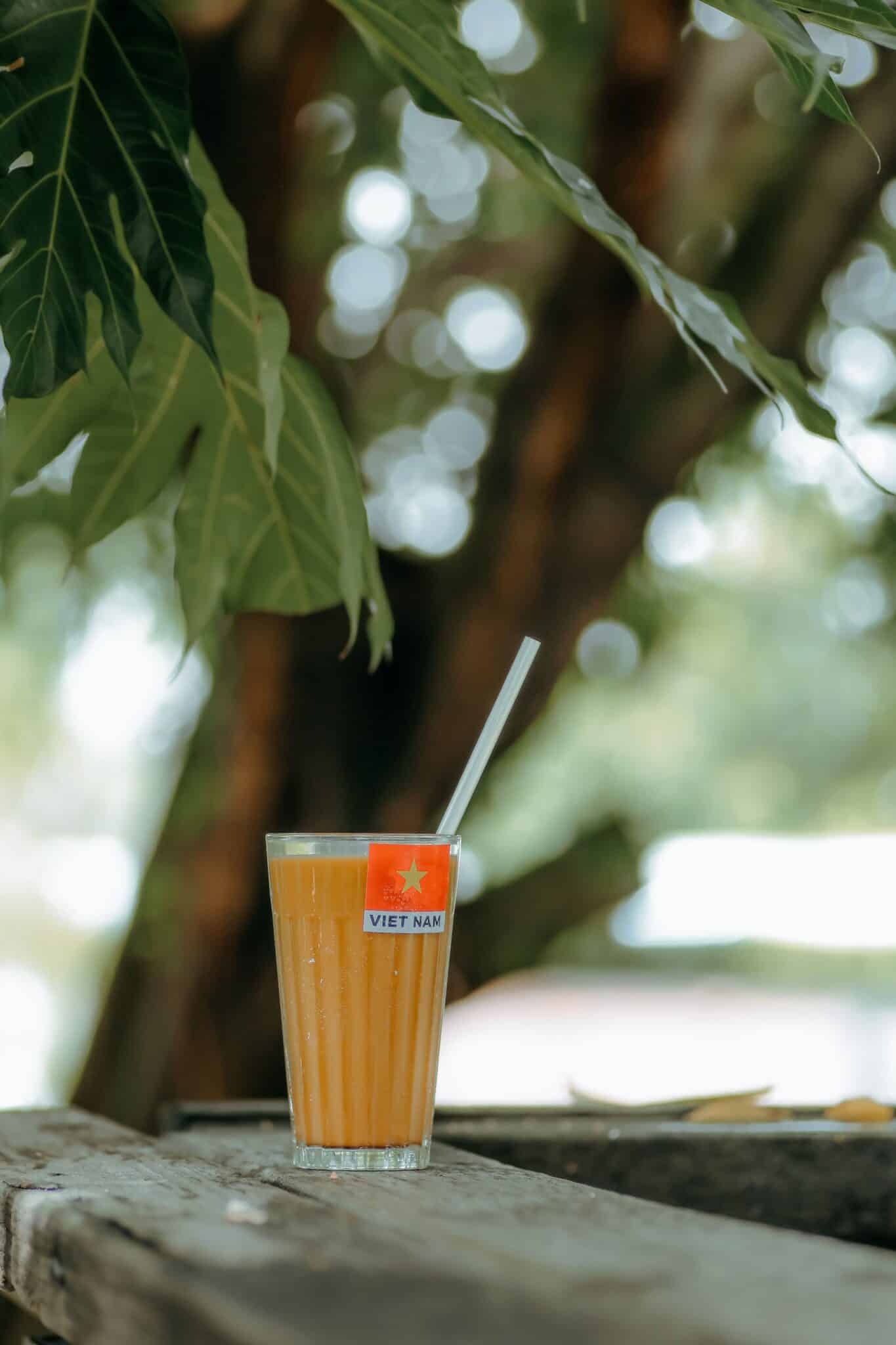
While it might be a bummer having to leave your kratom at home, Vietnam has a local market that offers quite the range of kratom alternatives. These herbal and plant-based products provide similar effects to your average kratom products, and may sufficiently fill-in for kratom while you’re visiting the country.
- Robusta coffee – Vietnam is famous for its high-caffeine robusta coffee, which contains roughly twice the caffeine of standard arabica coffee. A traditional cà phê sữa đá (iced milk coffee) provides a strong, sustained physical and mental lift.
- Green & Lotus tea – Widely available at cafes and grocery stores, local green teas combine moderate caffeine with L-theanine, an amino acid that promotes calm alertness without the jitters.
- Passionflower, artichoke, or chamomile & chrysanthemum tea – Readily available in tea bags or bottled drinks, these herbal and floral infusions offer gentle evening-appropriate relaxation.
- Herbal balms, essential oils, and liniments – There is no shortage of topical herbal products in Vietnam. These provide physical relief for aches and discomfort, and leave a relaxing, minty feel and scent.
Leave Your Stash at Home
While Vietnam’s kratom laws don’t explicitly single out the herb, it joins other unnamed substances in the ‘unapproved herbal supplements’ category. So if you want to be a responsible kratom user (as you should), leave your stash at home.
Fortunately, Vietnam has a boatload of kratom alternatives that are easily accessible through grocery stores, convenience stores, and even sidewalk vendors. These natural, herbal, and plant-based options provide effects that closely resemble kratom’s, giving you an abundance of options while you’re visiting.